
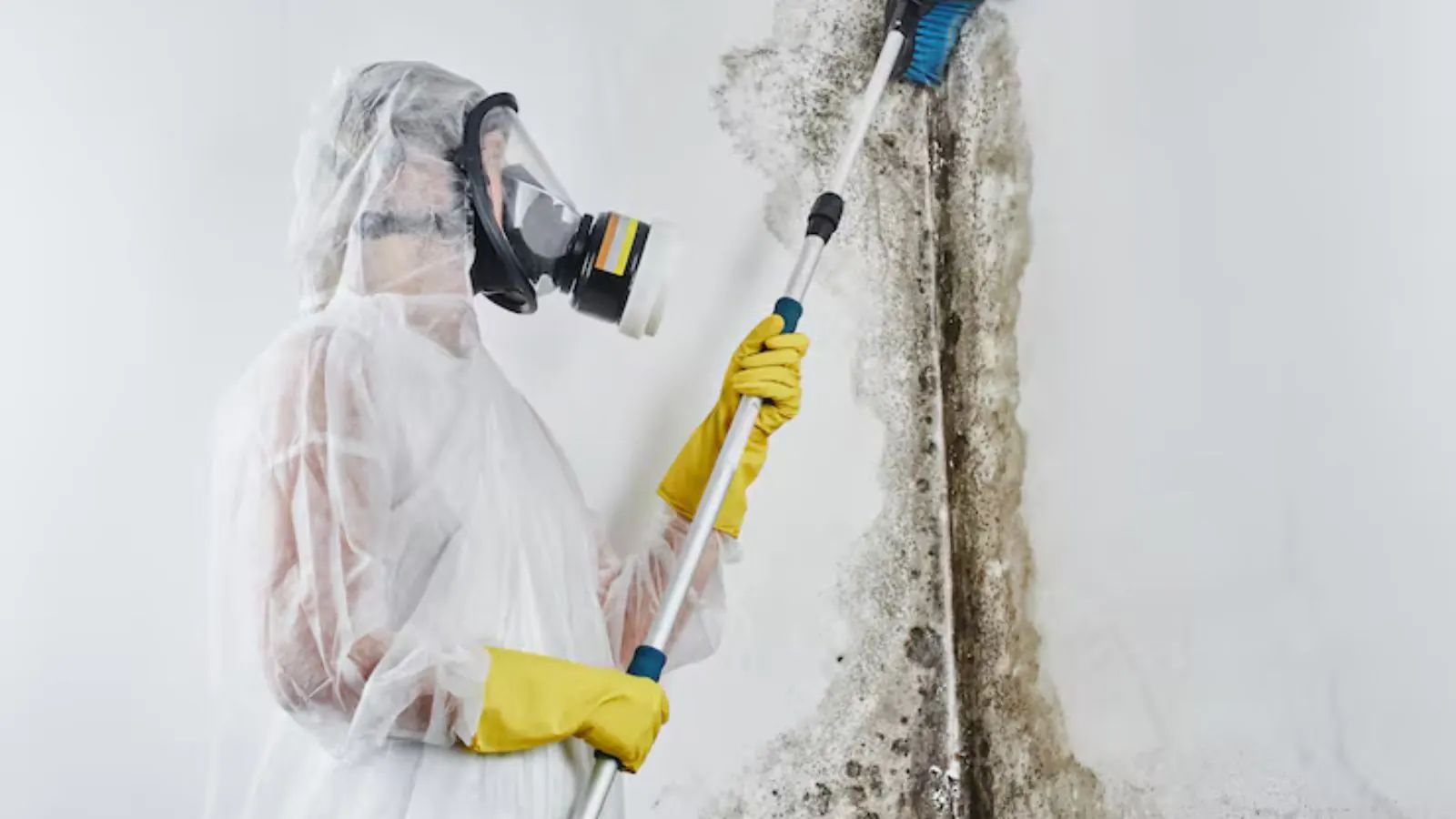
What mold remediation means
Mold remediation is the controlled removal and cleaning of mold growth from a building, done inside containment so spores are not spread to clean rooms. In Orem, UT, the calls usually start with a leak that sat longer than anyone realized. The work follows ANSI/IICRC S520, a published industry standard for mold remediation, and you can ask any company whether its crews work to it.
Mold needs moisture, so remediation always pairs with a water fix. If the water is recent, water mitigation dries the structure first. If wet debris is still in the house, water damage cleanup comes before mold work. Questions about how mold affects anyone's health belong with a physician, not with a restoration crew.
I found mold, what do I do first?
Stop and look at the moisture before you touch the mold. Turn off the leaking fixture if you can find it, keep the fan or HVAC from blowing across the area, and leave the growth undisturbed. Scrubbing or sanding dry mold can throw spores through the house, which turns a small patch into a large cleanup.
Take photos, note where the leak came from and how long it has run, and close the door to that room. Then call and describe what you see. The dispatcher can explain whether the situation points to a small surface cleanup or a contained job.
Mold after water damage
Mold tends to follow water that is not dried quickly. Wet drywall, carpet pad, wood framing and insulation all hold moisture, and if they stay damp for days growth can start on them. The timeline varies with temperature, humidity and the material, so do not treat any number of hours as a rule.
That is why drying fast matters after any leak. If you had a burst pipe, a washer valve failure or a roof leak that was not fully dried, hidden growth in the wall cavity is possible. A musty smell, a stain that returns after painting, or discolored baseboards are the usual clues, and a moisture meter and thermal imaging camera help the crew locate wet spots.
Mold removal and black mold cleanup
People search for black mold cleanup because dark patches look alarming, but color alone does not identify what is growing. Many species are black, green, white or gray, and only laboratory analysis can name one. For the work, the approach is the same whatever the color. Contain the area, remove affected materials, clean the surfaces and fix the moisture.
We do not diagnose mold type or make claims about health effects. If you are worried about how mold in your home affects you or your family, speak with a physician. For the building, the question is how much material is affected and what has to come out.
Bathroom, closet and ceiling mold after a leak
- Dark spots under a bathroom sink after a drip from the supply line or P-trap
- Growth on the ceiling below an upstairs toilet, tub or shower that has leaked
- Fuzzy or speckled patches on the back wall of a closet against an exterior wall
- Discoloration along the top of a finished basement wall near a window well
- Black lines in grout or caulk that return soon after cleaning
- A damp, earthy smell near a water heater, AC air handler or condensate line
- Paint that bubbles above a stain that keeps returning
Surface mold on tile or sealed fixtures can often be cleaned by a homeowner with ordinary care. Growth on drywall, wood framing, insulation or carpet is different, since those materials are porous and the growth goes beneath the surface.
How remediation is carried out
Find the moisture source and the extent of growth
A moisture meter and thermal imaging camera show wet materials. The crew sets a plan that names the affected rooms, materials and the barriers needed.
Set up containment barriers
Polyethylene sheeting and zipper doors seal the work area, and the room is kept under negative air so air flows into the containment instead of out.
Run HEPA air scrubbing
HEPA air scrubbers pull airborne particles through filters. Workers wear protective suits, gloves, eye protection and respirators.
Remove affected porous materials
Moldy drywall, insulation, carpet and pad are cut out, bagged in the containment and carried out through a controlled route.
Clean the remaining surfaces
Framing and hard surfaces are cleaned with HEPA vacuums and damp wiping. Where the plan calls for it, an antimicrobial treatment is applied.
Dry the area and verify
Air movers and LGR dehumidifiers dry what remains until meter readings return to normal for the materials.
Break down containment and clean up
Barriers come down after cleaning, and the area is prepared for a visual check or independent clearance testing.
The leak has to be fixed first
Cleaning mold off a wet surface without fixing the water is a temporary result. Whatever feeds the moisture, whether a failed supply line, a sweating air handler, a roof leak or a window well that fills, has to be repaired before anything is rebuilt. Mold needs moisture, and remediation does not change where the moisture comes from.
A plumber, roofer or HVAC technician handles the source. The remediation crew confirms with a moisture meter that the materials are dry. If moisture returns, growth can too, so watch for stains, smells and humidity above comfortable levels. A hygrometer is a cheap way to track humidity in a basement or closet.
How much mold work is it? A decision table
| What you see | What it usually involves | Who handles it |
|---|---|---|
| Small spots on tile, glass or sealed surfaces | Surface cleaning and fixing ventilation | Homeowner with care |
| Staining on a painted ceiling after a short leak | Moisture check, possible board replacement | Restoration crew or repair contractor |
| Growth across drywall or a section of wall | Containment, removal of board, HEPA cleaning | Remediation crew |
| Growth in insulation, framing or crawl space | Containment, negative air, removal, cleaning | Remediation crew |
| Growth spread across rooms or through ducts | Larger containment, HVAC inspection, staged work | Remediation crew, HVAC contractor |
| Any growth after a flood or sewage event | Cleanup first, then mold assessment | Flood and remediation crews |
Independent clearance testing
Clearance testing is done by an independent party after remediation to check whether the work area has returned to a normal condition. The tester takes air or surface samples, sends them to a lab, and compares the results to a baseline, usually outdoor air or an unaffected room. Independent means the tester is not the company that did the remediation.
A tester is not required for every job, but lenders, buyers, landlords or insurers sometimes ask for the report. If you think you will need one, tell the dispatcher at the start so the work and the paperwork line up. A clearance report documents conditions at the time of sampling and does not promise anything about the future.
Mold and a home sale or loan
Mold often comes up during a sale. A buyer's inspector may flag staining or a musty smell, and a lender may ask for the issue to be resolved before funding. We cannot promise what a lender, buyer or appraiser will accept. What exists is documentation: a written scope of work, photos, moisture readings and an independent clearance report.
Sellers should disclose known water damage and mold as their agent or attorney advises. If a closing date is close, call and ask how much notice the work needs. The dispatcher will explain what is involved without making promises about the calendar.
Bleach, vinegar and store products
Bleach, vinegar and shelf products can lighten surface stains, but they do not remove growth from porous material. Bleach can also add moisture to drywall and wood. Mixing bleach with ammonia-based cleaners produces dangerous fumes and should be avoided.
If a small patch on tile is your only problem, use detergent, gloves and a damp cloth, and run the exhaust fan. If it sits on drywall, ceiling board or framing, cleaning the surface rarely finishes the job and removal usually follows.
What shapes the cost of mold remediation
Area and materials affected
A small patch of ceiling board is a short job. Growth through a wall cavity, a crawl space or a basement wall is much larger.
Containment level
Barriers, negative air machines and HEPA air scrubbers add setup time and equipment, and bigger scopes need more of each.
Access
Attics, crawl spaces, tight closets and finished basements change how long removal takes and how debris leaves the house.
Testing and documentation
Independent clearance testing is a separate cost from remediation, and requirements from a lender or buyer can affect it.
Rebuild afterward
Replacing removed drywall, insulation and finishes is a separate phase handled through water damage repair.
Insurance may respond when mold follows a sudden and accidental water loss, while mold from long-term leaks or neglect is often excluded. Policies differ on mold limits, so check your policy and ask your insurer. Call for real numbers on your house.
Want your real number? Call the 24/7 line and the dispatcher explains the scope and the price before any work starts.
☎ Call (385) 988-9410Mold work near Provo and Utah Valley University
Crews dispatched from Orem also work in Provo, about 4 miles south and east, where student rentals near BYU are common. Tenants and landlords should document the moisture source, the date it was reported and the work done, since those records matter if a deposit or lease question follows.
Orem has a similar rental base around Utah Valley University. Photos with dates, written notices and a remediation scope make a dispute simpler. Before rebuilding, ask the Orem Building Safety Division whether the repair needs a permit, and ask any company whether Utah licenses mold work and what it can show you.
Frequently asked questions
ANSI/IICRC S520 is a published industry standard for professional mold remediation. It covers assessment, containment, removal and verification. You can ask any company whether its crews work to it and what it can show you.
Small surface spots on tile or glass can be cleaned with detergent, gloves and a damp cloth. Growth on drywall, insulation, framing or carpet, or anything larger than a small patch, is better handled with containment and HEPA equipment.
Bleach may lighten stains on hard surfaces, but it does not solve growth in porous materials and it adds moisture. The fix is removing the affected material and the moisture.
Color does not tell you what species is present. The cleanup approach is containment, removal and moisture control regardless of color. Health questions belong with a physician.
Not always. A lender, buyer, landlord or insurer sometimes requests it. An independent tester samples the area after remediation and a lab compares results to a baseline. Tell the dispatcher early if you may need one.
We cannot speak for any lender. Documentation such as a scope of work and an independent clearance report is what people usually bring. Ask your lender what it accepts.
Mold needs moisture. If a leak or humidity returns, growth can too, so the water source must be fixed and humidity monitored. No one can promise it will never return.
Ask whether Utah licenses mold work and what the company can show you, such as insurance, a written scope and whether its crews follow S520.
No, we do not offer rentals. LGR dehumidifiers pull moisture from the air and HEPA air scrubbers filter air in containment. Drying takes days, not hours, and depends on the materials.
It depends on the policy and the cause. Mold after a sudden and accidental leak may be covered, while mold from gradual leaks often is not. Check your policy and ask your insurer.