
Why crawl spaces collect moisture
A crawl space is a low, dark pocket between the soil and the first floor. Bare ground gives off water vapor all year, vents let in humid air in summer, and plumbing, water heaters, and AC drain lines often run through it. Any of these can leave wood framing and insulation damp.
Mold needs moisture and an organic surface, and a damp crawl space supplies both through joists, subfloor, and paper-faced insulation. That is why this part of the house shows growth long before anyone looks. Remediation works only when the moisture source is found and fixed.
Signs worth a closer look
- A musty smell that rises through floor registers or closet floors
- Dark or fuzzy patches on joists, subfloor, or insulation
- Insulation that sags, falls, or looks soaked
- Standing water, wet soil, or a muddy floor after rain
- Cupped hardwood or soft spots in the floor above
- Condensation on ducts or cold water lines
- Rodent or insect activity around damp insulation
Safety before you crawl in
A crawl space is a confined, hard-to-escape area. Never enter one with standing water near wiring, outlets, or a water heater, and call 911 or the utility first if you suspect an electrical or gas problem. Wear gloves, eye protection, and a respirator rated for the job if you must look.
A flashlight and a phone camera from the access hatch often show enough to decide next steps. If you see standing water, hanging insulation, or widespread growth, stop and call. Disturbing growth by hand can spread debris through the space and into living areas.
How contained remediation works
Find and fix the moisture source
A plumber repairs leaks, a roofer or landscaper corrects drainage, and a technician checks condensate lines. The crew confirms with a moisture meter which materials are wet.
Set up containment
Plastic barriers seal the access point and any openings into the living space. Negative air machines with HEPA filtration pull air out of the work area so dust moves in, not out.
Remove affected insulation and unsalvageable material
Crews bag wet insulation and damaged vapor barrier inside the containment before it leaves the space. Soft or rotten wood is cut out and replaced by a carpenter.
Clean the framing
Joists and subfloor surfaces are HEPA vacuumed, then wire brushed, sanded, or blasted as the material allows, followed by wipe-down and antimicrobial treatment where appropriate.
Dry the space
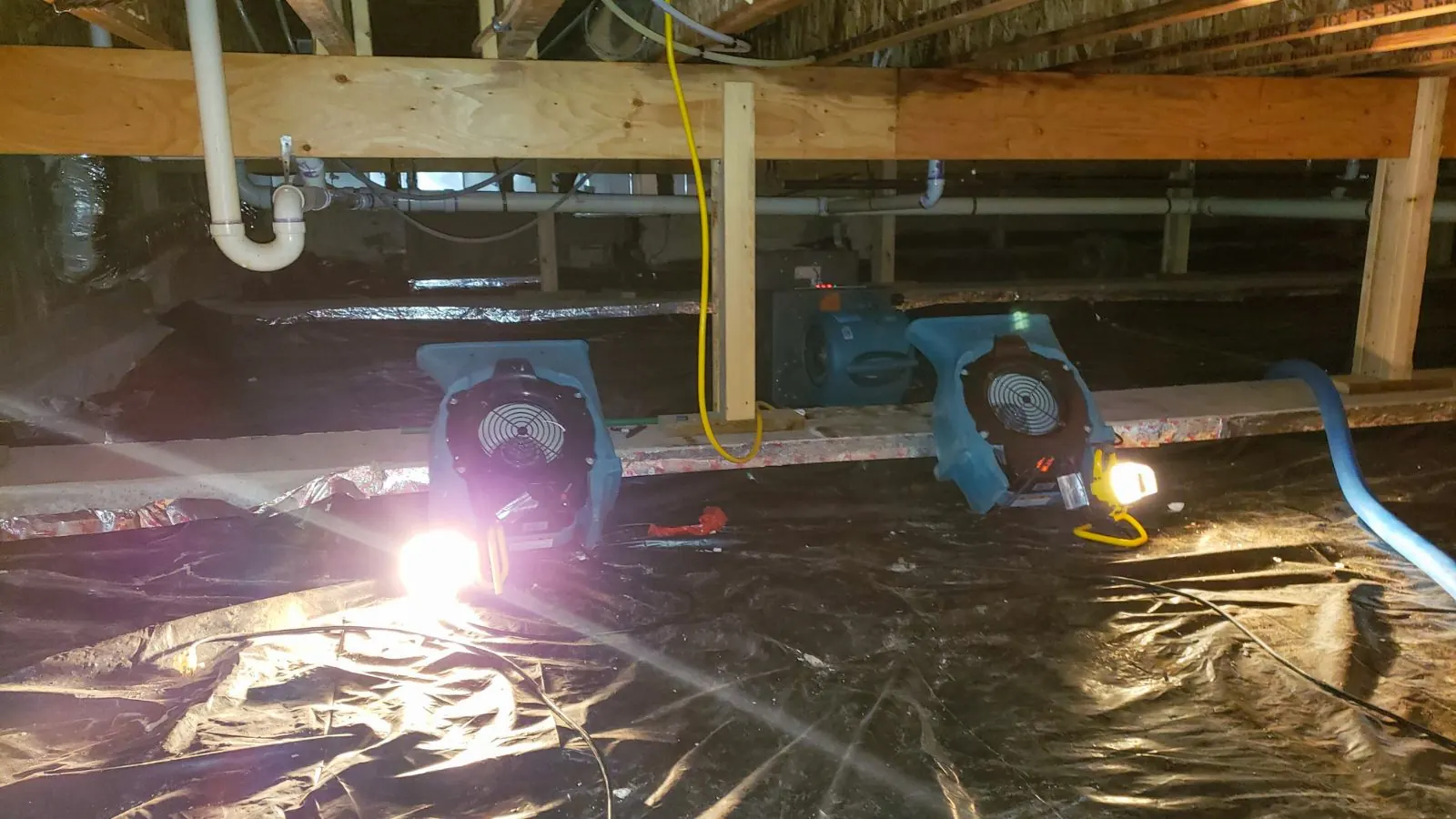
Dehumidifiers and air movers run until readings on wood and soil drop to a dry reference. Drying often runs for days.
Verify and rebuild
Independent clearance testing, done by a third party who does not do the cleanup, can confirm the work area meets the plan. Then insulation, vapor barrier, and any repairs go back in.
The work follows the ANSI/IICRC S520 standard for mold remediation. Ask any company whether its crews work to it, and ask whether Utah licenses mold work and what the company can show you.
Not sure what you are looking at in your home? Describe it to dispatch.
☎ Call (385) 988-9410Vented, encapsulated, or conditioned: your options
Traditional crawl spaces rely on foundation vents to bring in outdoor air. In humid weather, that air can add moisture instead of removing it. Many builders now close the vents, lay a heavy plastic vapor barrier over the soil with taped seams, and sometimes add a dehumidifier or conditioned air.
Encapsulation is a building-science upgrade done by a crawl space or waterproofing contractor, not part of mold remediation itself. Restoration is not waterproofing, so ask a foundation or waterproofing contractor about drainage and grading before you spend on liners.
When water has come in from outside
Snowmelt, a heavy storm, or a drainage failure can put standing water under the house. Pumping, drying, and removing contaminated material follows the same steps as a larger flood. If groundwater or a sewer line is the source, treat the water as contaminated and stay out of it.
Crawl space flooding is a case for flood damage restoration, because the water must come out before any mold work begins. Once the space is dry and the source is fixed, mold remediation can proceed under containment.
Mistakes that bring the problem back
Fixing the surface only
Cleaning joists without repairing a leak, a drain, or grading leaves the same moisture in place for new growth.
Sealing over damp wood
Spray foam, paint, or liner placed on wet framing traps water against it and hides decay.
Skipping containment
Brushing or sanding in an open crawl space sends dust toward floor registers and into the house above.
Closing vents without a plan
Shutting vents helps only when the soil is covered and humidity is managed some other way.
Ignoring the soil
Bare dirt keeps releasing vapor. Covering it with a sealed barrier is a basic part of most lasting fixes.
What to document
Photograph every angle from the access hatch, including the insulation, the joists, any standing water, and plumbing. Note the date, the weather, and any appliance or pipe that failed. If you hire a plumber or drainage contractor, keep their invoice and findings.
Keep moisture readings before and after drying, and save the remediation plan and any clearance report. These papers help in a claim, in a sale, and in working out later whether the problem came back.
When to call a professional
Call when growth covers more than a small area, when insulation is soaked, or when you see standing water. Crawl spaces are cramped and the access is awkward, so hiring a crew with the right equipment keeps the work safer. We answer 24/7, and while you wait you can stay out of the space and shut off the water if a pipe is leaking.
Our dispatch includes Pleasant Grove, where creek runoff and bench slope make grading important, and Lindon, where the secondary irrigation system must be drained and shut off each fall. Ask each company how it handles containment and verification.
What Orem homeowners should know
The Dry Canyon drainage northeast of Orem and Lindon drains to a detention basin near the Dry Canyon trailhead, and the Provo River is the city's main flood concern. Orem Public Works tells residents to point downspouts and sump pump discharge away from the house. If a crawl space is wet after snowmelt, those two items are the first things to check.
Standard homeowners and renters policies do not cover flood, and a separate flood policy, mostly through the NFIP, usually has a waiting period of about 30 days. A crawl space that floods from rising water is usually a flood claim, not a plumbing claim. Ask your insurer what your policy says before the season starts.
Source types: Daily Herald reporting of Orem Public Works statements, 2023, Utah Insurance Department Flood FAQFrequently asked questions
Spraying does not fix the moisture that let it grow, and spraying on a wet surface adds to it. Products can also leave residue on framing. Fix the source, dry the space, and remove growth under a plan.
Wet, fallen, or growth-covered insulation is usually removed and replaced. Dry insulation with no growth may stay, but a technician confirms this with a meter.
It is a plastic sheet over the soil that slows water vapor rising into the space. Overlaps are taped and the edges are sealed against the walls. It reduces moisture, but it does not replace drainage or a dehumidifier.
It depends on the size, the amount of growth, and the drying needed. Setup and cleaning move quickly, while drying and verification take longer, often days.
A third party who is not doing the cleanup samples the air or surfaces after remediation to see whether the work area meets the plan. Ask what test is used and what the results are compared against.
It depends on the cause. Sudden and accidental water damage is often covered, gradual leaks and neglect often are not, and flood damage usually needs separate flood coverage. Check your policy or ask your insurer.
Point downspouts and sump pump discharge away from the house, clear gutters and storm drains near your lot, and check the grade at the foundation. If your lot is near the Dry Canyon drainage or the Provo River, check flood maps and insurance, and call us on our 24/7 line if water gets in.