
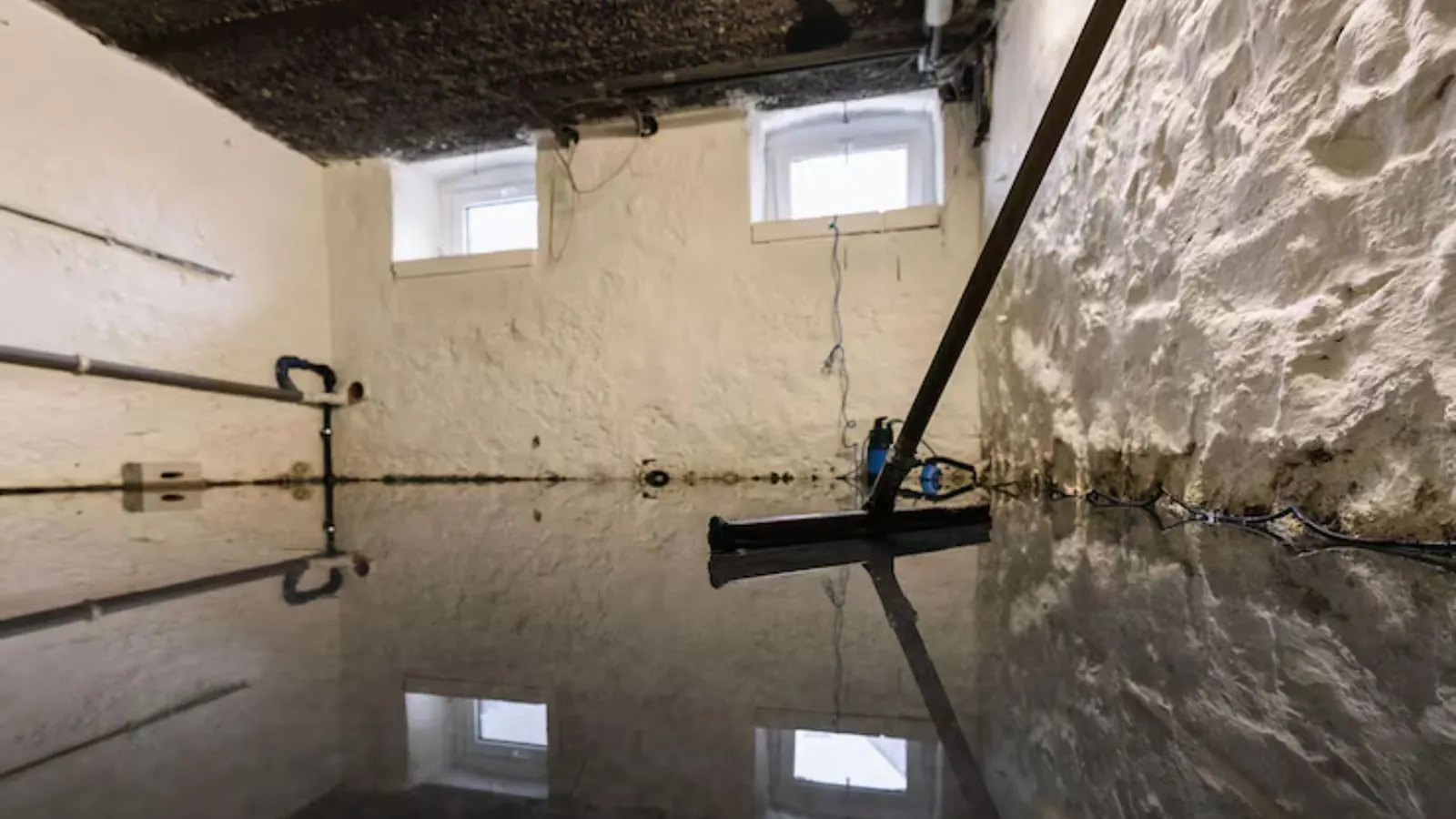
Before you step down the stairs
A basement with water on the floor can hide live electrical hazards. If water reaches outlets, the furnace, the water heater, or the electrical panel, stay on the stairs or upstairs. Turn off power at the main breaker only if the panel is dry and you can reach it without standing in water.
If you smell gas or see sparks, leave the house and call 911 or the utility before you call anyone else. Sewage in the water changes the job completely, and we cover that below. Do not wade through water you cannot see the bottom of.
Why the water got in decides what you do next
A burst supply line sends clean water, and that is the easiest kind to handle. A failed sump pump, a window well that filled, or groundwater seeping through a wall base brings in dirtier water that carries soil and bacteria. Sewage from a floor drain is the most serious.
Floods from outside are a different category from plumbing failures, and they are handled through flood damage restoration because the water is contaminated and the volume is larger. If you are not sure where it came from, treat it as contaminated until someone checks.
Step by step: cleaning up a wet basement
Stop the source
Close the shutoff valve at the appliance or fixture, or the main water valve for the house. For runoff, there is little to stop, so move to extraction. Lift the sump lid and confirm whether the pump is running, jammed, or unplugged.
Photograph and video
Capture the waterline on walls, the contents, the sump pit, and any visible cause. Do this before moving anything, since later photos will not show the original condition.
Gear up
Wear waterproof boots, gloves, and eye protection, and an N95 respirator if the water is dirty or the room is dusty. Rubber-soled boots give better footing on wet concrete.
Pump or extract the water
A submersible utility pump handles deeper water, and a wet and dry vacuum finishes the thin film. Lower the level gradually, not all at once, when the soil outside is saturated, so the pressure outside does not force walls inward.
Haul out wet contents
Carry out furniture, boxes, and rugs. Wet cardboard and stored paper should go straight outside, and so should wet carpet pad, which holds water and cannot be dried well.
Sort what stays and goes
Hard, nonporous items such as metal, glass, and plastic can be cleaned. Soaked upholstery, mattresses, and anything touched by dirty water usually goes. List each item for your records.
Open the room to dry air
Run a dehumidifier and fans, and open windows if outdoor air is drier than indoor air. Pull baseboards so the wall cavity can breathe.
Clean and sanitize
Scrub hard surfaces with detergent and warm water, then apply a disinfectant that is labeled for the surface. Rinse tools and boots outside the house.
Check moisture before rebuilding
Use a moisture meter on drywall, framing, and concrete. Materials that read above a dry reference of the same type are still wet, even when they feel dry.
What to keep and what to throw out
Water category, how long the item sat wet, and the material decide this. When in doubt after dirty water, discard porous items.
| Item | Clean water, dried within a day or two | Dirty or sewage water |
|---|---|---|
| Carpet and pad | Carpet may be saved, pad usually replaced | Remove both |
| Drywall | Often dried if firm and uncontaminated | Cut out at least above the waterline |
| Wood furniture, solid | Often cleaned and dried | Clean only if it can be sanitized, otherwise discard |
| Upholstery and mattresses | Case by case | Discard |
| Cardboard and books | Discard if soaked | Discard |
| Concrete floors and block walls | Clean and dry | Clean, sanitize, and dry |
Standing water or a wet wall in your home? Talk to a dispatcher now.
☎ Call (385) 988-9410When it is sewage
Water that came up through a floor drain or toilet is contaminated and calls for protective gear and removal of anything porous it touched. Keep children and pets out, and keep the area closed off from the rest of the house.
Do not run the sump pump discharge or any fan in a way that pushes contaminated air upstairs. Call a crew trained for this work. They set up barriers, extract, and apply antimicrobial treatment, then dry the structure with air movers and LGR dehumidifiers.
Sump pump checks that matter
- Pour a bucket of water into the pit and watch the float rise and the pump switch on
- Confirm the discharge pipe leads away from the house and is not frozen or buried
- Check that the check valve is installed and not stuck, so water does not fall back
- Clear silt and gravel from the pit, since debris jams floats
- Plug it into its own outlet, and consider a battery backup for the storms that also knock out power
A pump that clicks but moves no water is a sign the impeller or check valve has failed, and a plumber can replace either.
When the job needs a crew
Call a professional for sewage, for water that has been standing more than a day, for any amount over a few inches, or when you cannot find the source. Water damage cleanup covers removal of debris and contaminated materials, sanitizing, and deodorizing once the source is stopped.
The dispatch line runs around the clock, including nights and weekends, and it serves Orem along with Pleasant Grove and Vineyard. Ask the crew about moisture mapping and drying logs so you can see when the basement is truly dry.
Drying takes longer than it looks
A basement slab and block walls hold water for days after the surface looks dry. Drying runs for days, not hours, and it speeds up with air movers pushing dry air across surfaces and LGR dehumidifiers pulling moisture from the air.
Stop the equipment only after moisture meter readings match a dry reference. Closing walls over damp framing is how musty smells and mold start, and any mold growth that appears afterward is its own project.
The industry reference for how water is classified and dried is ANSI/IICRC S500. Ask any crew you consider whether they follow it, because the water category it describes decides what can be saved and what must be removed.
Common mistakes to avoid
Pumping too fast
Emptying a flooded basement in one go, with saturated soil outside, can stress the walls.
Using household fans on sewage
Fans spread contaminated moisture and odor through the whole house.
Keeping soaked carpet pad
Pad holds water and breeds odor. Replace it even when the carpet is dry.
Skipping the documentation
Photos taken after cleanup do not show what the room looked like when it flooded.
What Orem homeowners should know
Spring runoff is Orem's flood concern, and the Provo River is the focus. In the 2023 high-runoff spring, Orem Public Works kept nearly 5,000 sandbags available, starting with residents next to the Provo River, and the city promotes alerts at alerts.utahcounty.gov. Sign up for those alerts, clear gutters and storm drains, and point downspouts and sump discharge well away from the house.
The city runs its culinary water through the Water Section of Public Works, with about 23,530 connections. If a main line breaks before the meter, call the city water line instead of a plumber. Find your own main shutoff and the meter now, so you can explain the location to a dispatcher.
Source types: Daily Herald reporting of Orem Public Works, 2023, Orem 2022 Water Conservation PlanFrequently asked questions
Materials start to degrade within a day or two, and mold can begin soon after in damp, warm conditions. Faster extraction and drying shrink the job.
A wet and dry shop vacuum is fine for small amounts. Deep water needs a submersible pump or a truck-mounted extraction unit. Never use a vacuum that is not rated for water near electrical outlets or wet floors.
Yes. Removing the standing water only starts the job. A dehumidifier and air movers dry what remains in the concrete, framing, and drywall.
It depends on the cause. Sudden plumbing failures are often covered, flood is usually excluded, and sewer backup depends on an endorsement. Check your policy and ask your insurer.
No. Restoration cleans and dries the damage. Waterproofing and foundation repair belong to a waterproofing or foundation contractor.
Clean-water drywall that is still firm may be dried in place. Dirty-water or sagging drywall is cut out, usually above the waterline, and replaced after the wall cavity dries.
Call the city water line, since the main belongs to Orem's Water Section of Public Works, not to a plumber. After the water is stopped, call us for extraction and drying inside the home.