
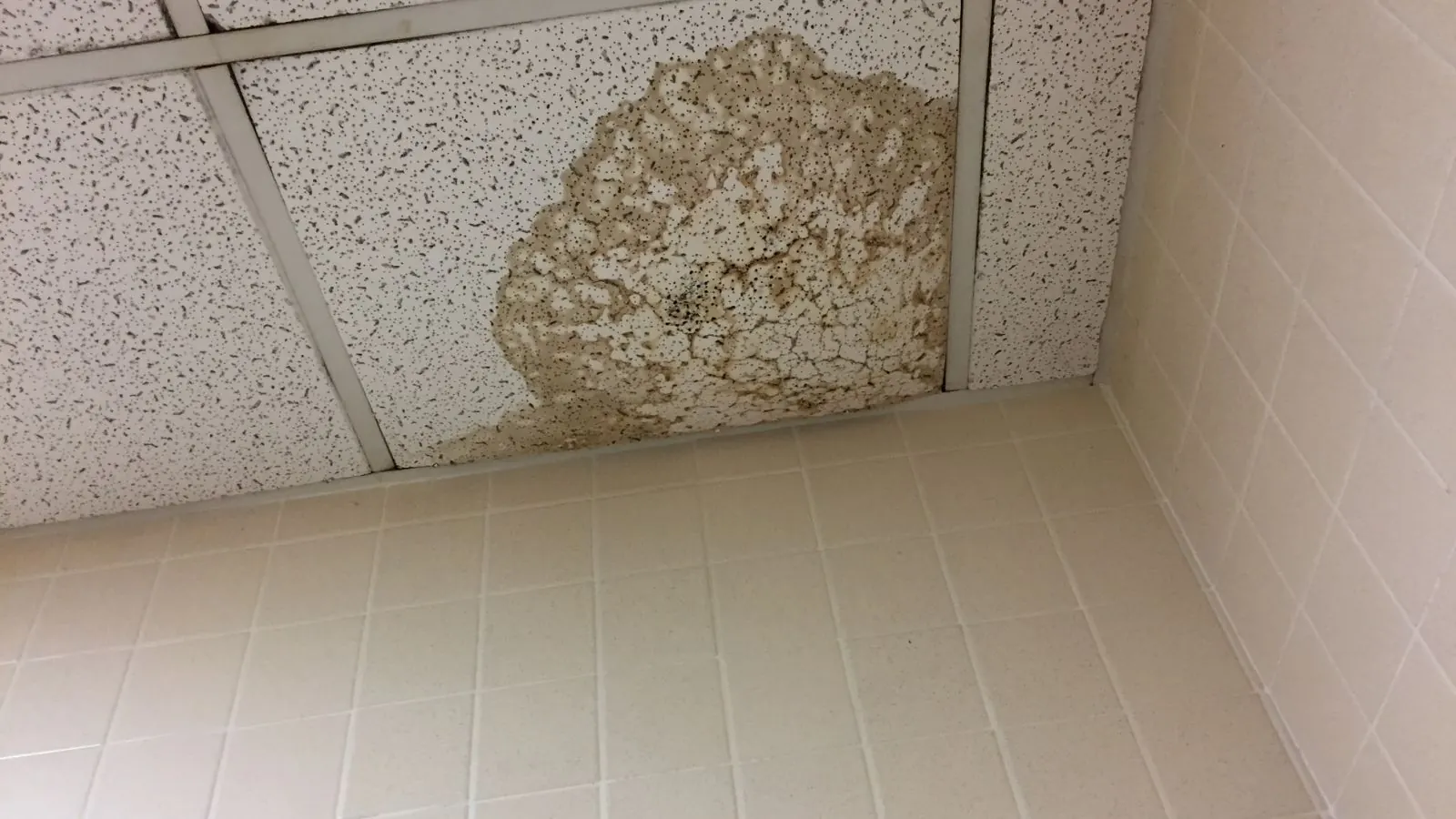
Why an air conditioner leaks inside the house
A cooling system pulls moisture out of your indoor air, and that moisture has to go somewhere. The evaporator coil collects it, a drain pan catches it, and a condensate line carries it outside or to a drain. When any link in that chain fails, the water lands on drywall, insulation, or flooring.
In a hot Utah County summer the system runs for long stretches, so a small blockage can turn into a ceiling stain in a week. The first sign is often a brown ring on the ceiling below an attic unit, or a damp floor in a closet that holds the air handler.
The usual causes, from most to least common
Clogged condensate line
Algae and slime build up inside the drain pipe until water backs into the pan and spills over the edge. This causes most summer leaks.
Cracked or rusted drain pan
Older metal pans corrode and plastic pans crack. Water drips straight through to the ceiling or floor below.
Frozen evaporator coil
A dirty filter or low airflow lets the coil ice over. When the ice melts, it overwhelms the pan in one rush.
Failed float switch or loose drain fitting
The safety switch that should shut the system off stays closed, or a joint in the drain line separates and drips on the structure.
When an AC leak is an emergency
Water near an electrical panel, outlet, light fixture, or the air handler's own wiring is an emergency. Stay out of the wet area. If the breaker panel is dry and safe to reach, turn off the cooling system at the thermostat and its breaker. Call 911 or the utility before you call us if you see sparks, smell burning, or suspect an electrical hazard.
A ceiling that bulges, sags, or drips steadily needs standing water removed fast. Poke a small hole at the lowest point of the bulge with a screwdriver over a bucket to let the water out in a controlled stream, and move furniture and valuables aside. Then call our 24/7 line, and the dispatcher will explain what happens next.
Stop the leak: a homeowner sequence
Turn the system off
Set the thermostat to off and, if the panel is dry, switch off the breaker for the air handler. Running a leaking unit keeps feeding the problem.
Find where the water collects
Check the drain pan under the air handler, the closet floor, and the attic decking around the unit. A flashlight and a dry towel show you the wet path quickly.
Empty the pan
Use a wet and dry vacuum or a sponge and bucket to remove standing water. Wipe the pan dry so you can see whether it is cracked.
Clear the condensate line
Find the outdoor end of the line, usually a small PVC pipe near the condenser. A wet and dry vacuum held to it with a towel seal pulls out most clogs. A cup of distilled vinegar poured into the access tee afterward slows new buildup.
Replace the filter
A clogged filter is a leading cause of frozen coils. Install a fresh one and let the coil thaw fully with the fan running before you restart cooling.
Test before you trust it
Restart the system and pour a small amount of water into the pan to watch it drain. If the pan fills or the float switch does not trip, stop and call an HVAC technician.
Fixing the equipment versus fixing the damage
An HVAC technician repairs the cooling system, and a restoration crew deals with the building. These are separate jobs. Sort them in that order, because drying a ceiling while the unit still leaks only resets the clock.
If water is standing in the closet, attic, or on a finished floor, emergency water removal pulls it out with portable extraction units before it wicks into walls and subfloor. Moisture meters and a thermal imaging camera then show how far the water traveled beyond the stain you can see.
Standing water or a wet wall in your home? Talk to a dispatcher now.
☎ Call (385) 988-9410How wet insulation and ceilings get repaired
What you replace depends on how long the material stayed wet and what it is made of. This is the general pattern for ceilings below an attic or closet air handler.
| Material | Dried in place? | Usually replaced when |
|---|---|---|
| Painted drywall ceiling | Often, if caught quickly and still firm | It sags, softens, crumbles, or stays above dry reference readings |
| Blown-in or batt insulation | Rarely, once saturated | It has been soaked, because wet insulation clumps and stays wet |
| Ceiling texture and paint | Never, these are finishes | Always during repair, matched after the drywall is sound |
| Closet subfloor or carpet | Sometimes, with air movers | Pad or particleboard swells, stains return, or an odor lingers |
Honest trade-offs matter here. Cutting out a soft section of ceiling costs less disruption than a full-ceiling replacement, but a patch only works if the surrounding material tested dry. Ask the crew to show you the readings.
The repair itself, once everything is dry
After drying, the rebuild follows a set order. Damaged insulation comes out and new insulation goes in, then drywall is hung, taped, mudded, sanded, primed with stain-blocking primer, and painted. Brown ring stains bleed through ordinary paint, so skipping the stain-blocking coat is how the ring reappears.
That sequence is the scope of water damage repair, and it should start only after moisture readings match a dry reference. If you want to see what a clean handoff looks like, ask for the final readings in writing.
Watch for mold after an AC leak
Mold needs moisture, and an attic or closet that stayed damp for several days can support growth. Look for fuzzy or speckled patches on the back of drywall, on joists, and on the underside of roof decking. A musty smell near the unit after the leak is fixed is a reason to ask someone to look.
Do not scrub a large area dry or paint over it. Work on larger areas follows the ANSI/IICRC S520 standard, and health questions belong with a physician.
What to document for your records
- Photos of the stain, the pan, the line, and the unit's model plate
- The date you first noticed the leak and when you turned the system off
- Receipts from the HVAC technician describing the failed part
- Moisture readings before and after drying
- A list of damaged belongings with photos
Sudden failures are often treated differently from slow, ongoing drips by insurers. Check your policy, ask your insurer how it handles each, and keep the HVAC invoice, which usually describes which kind of failure you had.
Preventing the next AC leak
Change filters on a schedule, keep the outdoor end of the condensate line clear of weeds, and have the line flushed and the pan inspected before cooling season. A float switch on the drain line is cheap insurance for attic units, since it stops the system before the pan overflows.
Some homeowners also pour a small amount of distilled vinegar down the line each spring. It will not fix a damaged pan, but it slows the slime that blocks most lines.
Calling for help in the nearby towns
The same dispatch covers Orem and the neighboring communities. Newer homes in Vineyard often put air handlers in attics, and a slow drip can sit unseen above a finished ceiling. Homes in American Fork with closet or crawl space units show the same pattern of clogged lines and stained floors.
What Orem homeowners should know
The Orem Building Safety Division says permits apply to plumbing, electrical, and heating or air-conditioning work, and to work that remodels or repairs, with exceptions. Replacing an air handler, rerouting a condensate line, or rebuilding a ceiling may need a permit, so ask Building Safety before the work starts and confirm your HVAC contractor is handling it.
Utah Valley University draws many renters to the neighborhoods around the campus. If you rent near the school and the air conditioner leaks, tell your landlord in writing the same day and photograph the damage. Keep a copy of the message, because your lease decides who arranges the repair and who covers your belongings.
Source types: City of Orem Building Safety DivisionFrequently asked questions
The usual cause is a clogged condensate line or a cracked drain pan in an attic or closet unit. Water overflows and soaks the ceiling below. Turn the system off, then trace the water back to the air handler.
Often yes. A wet and dry vacuum held to the outdoor end of the line pulls out most blockages. If water still backs up, the pan is cracked, or you cannot reach the unit safely, call an HVAC technician.
Drying takes days, not hours, and it depends on the materials and how long they stayed wet. Insulation and thick drywall dry slowly. Moisture readings, not appearance, show when it is finished.
Sudden and accidental water damage is often covered, and gradual leaks and neglect often are not. Wording varies between policies, so check yours and ask your insurer. The failed part and the timeline matter.
A ceiling that is still firm and tests dry after quick drying can often stay. One that sags, softens, or crumbles is usually cut out. Insulation that was soaked generally gets replaced.
No. HVAC technicians repair the equipment. The crews we dispatch remove water, dry the structure, and repair the damage afterward, so you will usually need both trades.
The Orem Building Safety Division lists permits for work that remodels or repairs, with exceptions, and for air-conditioning work. Your project may or may not qualify, so call them before you start.